
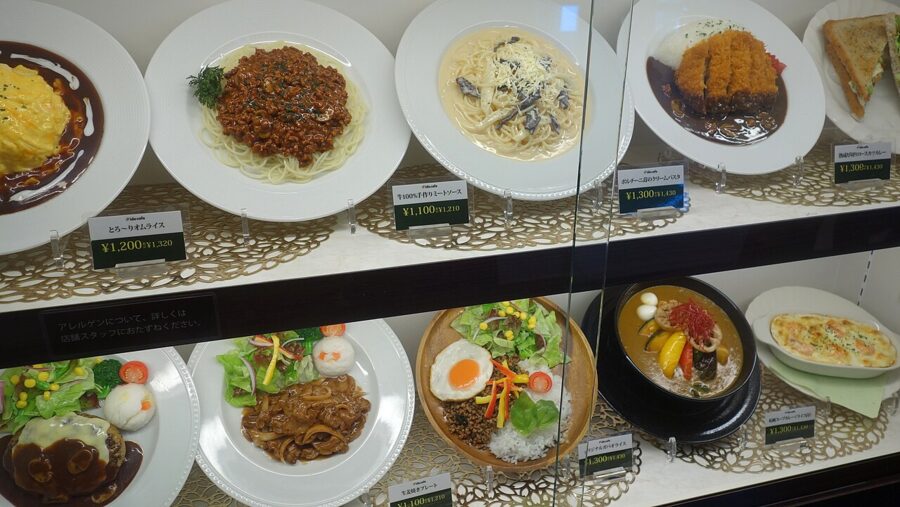
Most meals in Japan start with one word, いただきます (itadakimasu), and end with another, ごちそうさまでした (gochisōsama deshita). Between them sits a menu, and that is where most learners freeze. Yet a few dozen dish names and about fifteen phrases will feed you well anywhere, at a station counter in Sapporo or a noodle stall in Naha.
Japanese menus sort food by family: rice bowls, noodles, things grilled on skewers, things fried in batter. Learn the family name in kana and a wall of text shrinks to a short list of choices.
I would learn katakana before anything else here. Half a modern menu is loanwords written in it: カレー (karē) is curry, ビール (bīru) is beer, セット (setto) is a set. If you are still at the start of the Japanese language, katakana pays you back at the very next lunch.


目次 Contents
- Washoku: rice, soup and three sides
- Sushi and sashimi
- Noodles: ramen, udon and soba
- Donburi: a meal in one bowl
- Fried, grilled and griddled
- Pots at the table: nabe, sukiyaki and oden
- Curry rice and the yōshoku menu
- Something sweet
- Sake, beer and tea
- Where to eat it
- Menu words worth knowing
- Ordering, step by step
- Regional dishes to plan a trip around
- Table manners in brief
Washoku: rice, soup and three sides
和食 (washoku) means Japanese food as opposed to 洋食 (yōshoku), Western-style food. Its backbone is a pattern called 一汁三菜 (ichijū sansai), “one soup, three sides”: a bowl of rice, a bowl of miso soup, a main dish such as grilled fish and two smaller sides, usually something simmered and something dressed or pickled. The Ministry of Agriculture, Forestry and Fisheries credits that pattern, together with cooking that leans on dashi and its うま味 (umami), for the balance of the everyday diet.
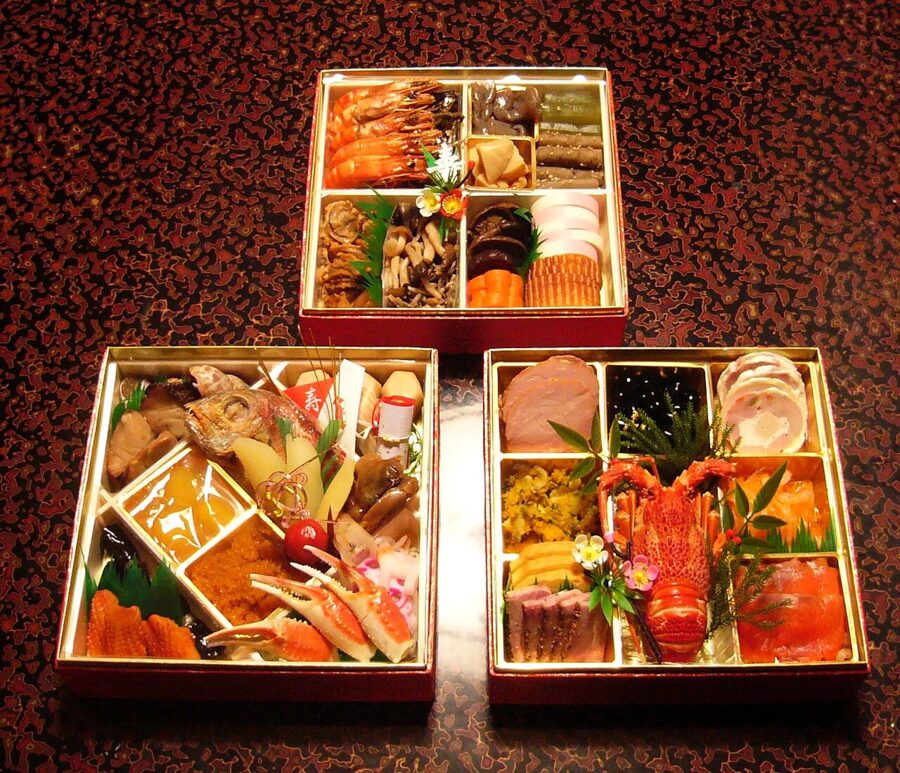
In December 2013 UNESCO added “Washoku, traditional dietary cultures of the Japanese, notably for the celebration of New Year” to its Representative List of the Intangible Cultural Heritage of Humanity. Note what was listed: not a dish, but a way of eating. It covers seasonal ingredients, the knowledge passed down at the family table, and the New Year meal in particular.
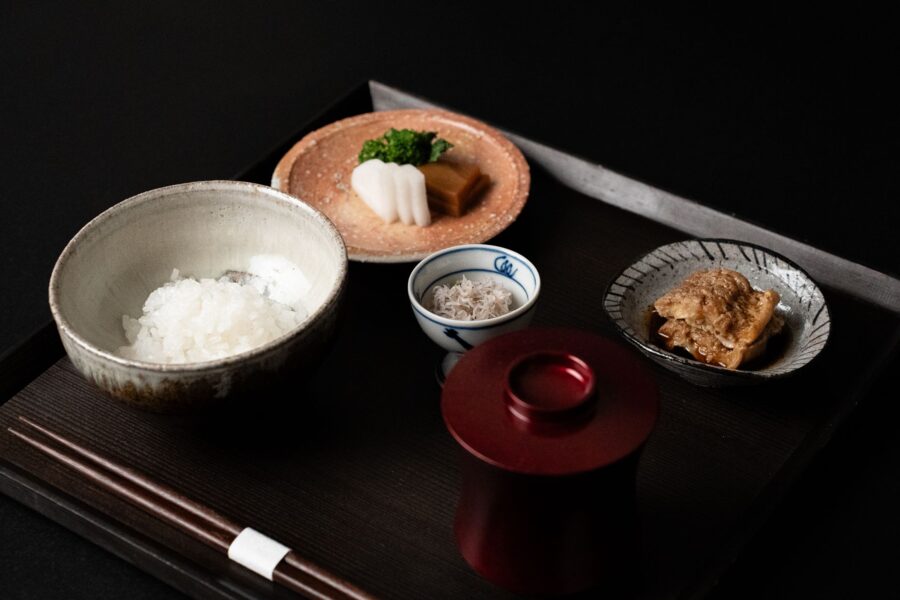
Japanese cooks also talk about 五法 (gohō), the five basic methods: serving raw (生, nama), simmering (煮る, niru), grilling (焼く, yaku), steaming (蒸す, musu) and deep-frying (揚げる, ageru). Those verbs turn up inside dish names all the time. 焼き魚 (yakizakana) is grilled fish, 煮物 (nimono) is a simmered dish, 揚げ物 (agemono) is anything fried. Learn the verb and you can guess the dish.
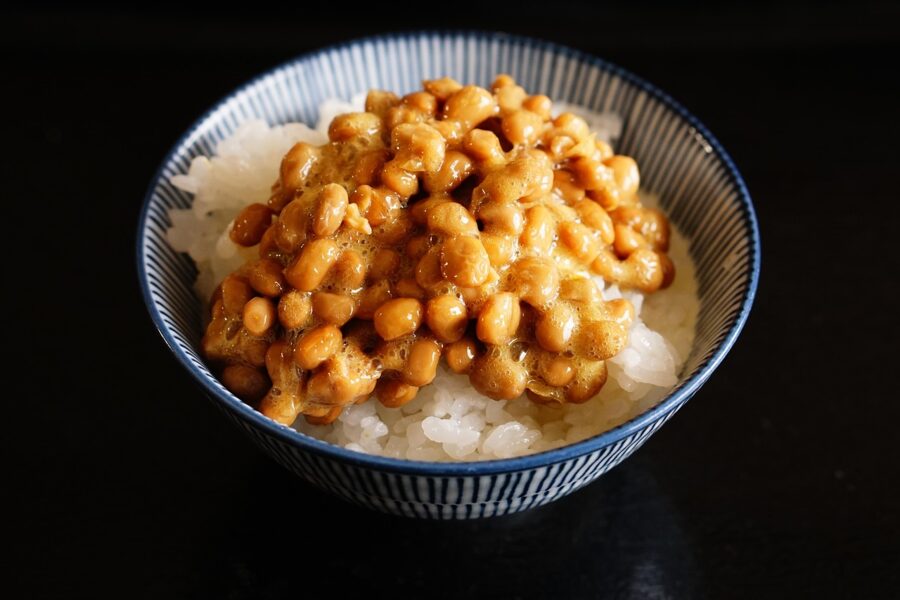
Breakfast at home is washoku at its plainest. 納豆 (nattō), fermented soybeans that divide the country, goes on rice with mustard and sauce, and 卵かけご飯 (tamago kake gohan) is raw egg stirred into hot rice.
Sushi and sashimi
The difference is the rice. 寿司 or すし (sushi) is anything made with vinegared rice, and 刺身 (sashimi) is sliced raw fish served on its own with soy sauce and wasabi. So sashimi is not sushi, and plenty of sushi has no raw fish in it at all.
握り (nigiri) is a hand-pressed oblong of rice with a topping. 巻き (maki) is rolled in nori, and 手巻き (temaki) is a cone you hold. ちらし寿司 (chirashi-zushi) scatters fish over a bowl of rice, and いなり寿司 (inari-zushi) stuffs rice into a pouch of sweet fried tofu. The word changes to “-zushi” after another word, a sound change you will meet again and again.
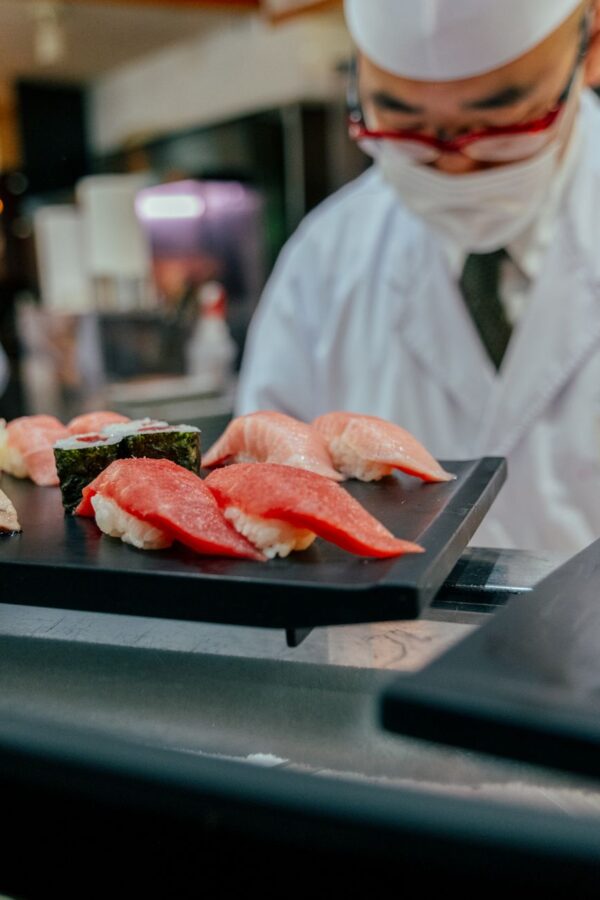
Sushi counters keep their own slang, and hearing it makes the meal more fun. シャリ (shari) is the rice, ネタ (neta) the topping, ガリ (gari) the pickled ginger, あがり (agari) the green tea and むらさき (murasaki) the soy sauce. Order さび抜き (sabinuki) if you want your nigiri without wasabi. お任せ (omakase), “I leave it to you”, means the chef chooses and the price is usually set in advance.
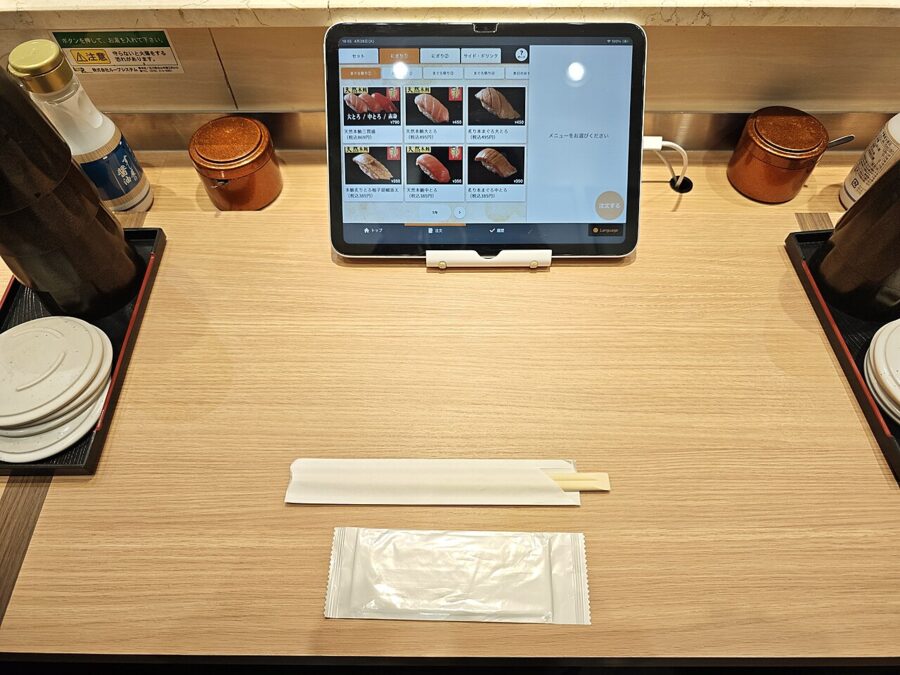
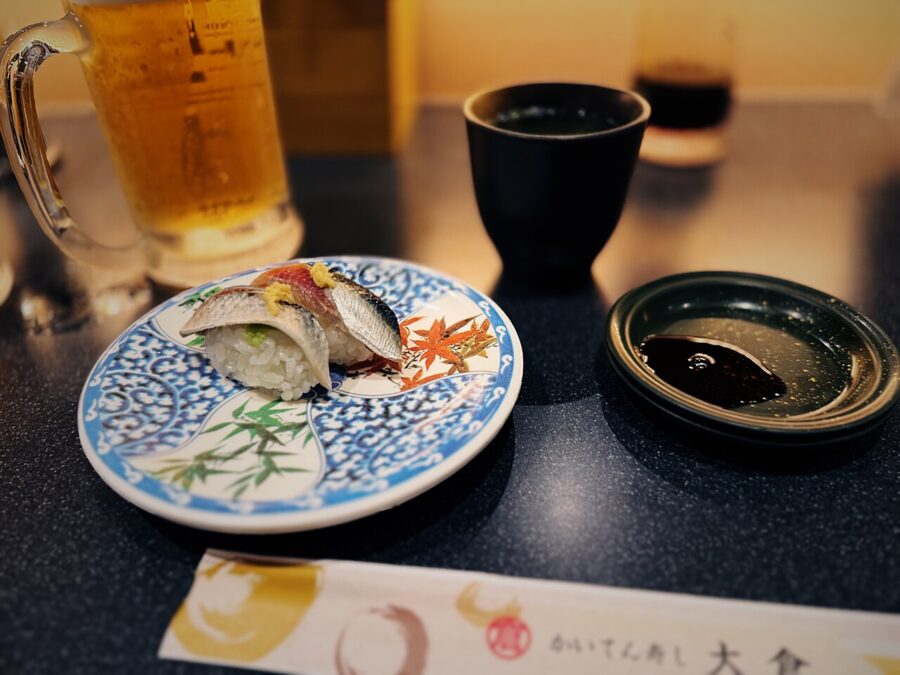
回転寿司 (kaitenzushi), conveyor-belt sushi, is where most people in Japan actually eat sushi. Plates go round on a belt, and these days most orders come by tablet and arrive on a separate express lane. The plate colors or the screen tell you the price, and at the end staff count your stack or you press a button to call for the bill.

Noodles: ramen, udon and soba
Ramen (ラーメン)
Ramen came from China and is written in katakana for that reason; older signs call it 中華そば (chūka soba), “Chinese noodles”. Shops are sorted by soup. 醤油 (shōyu) is soy sauce, 塩 (shio) is salt, 味噌 (miso) is miso, and 豚骨 (tonkotsu) is a cloudy pork-bone broth. つけ麺 (tsukemen) serves the noodles separately for dipping.
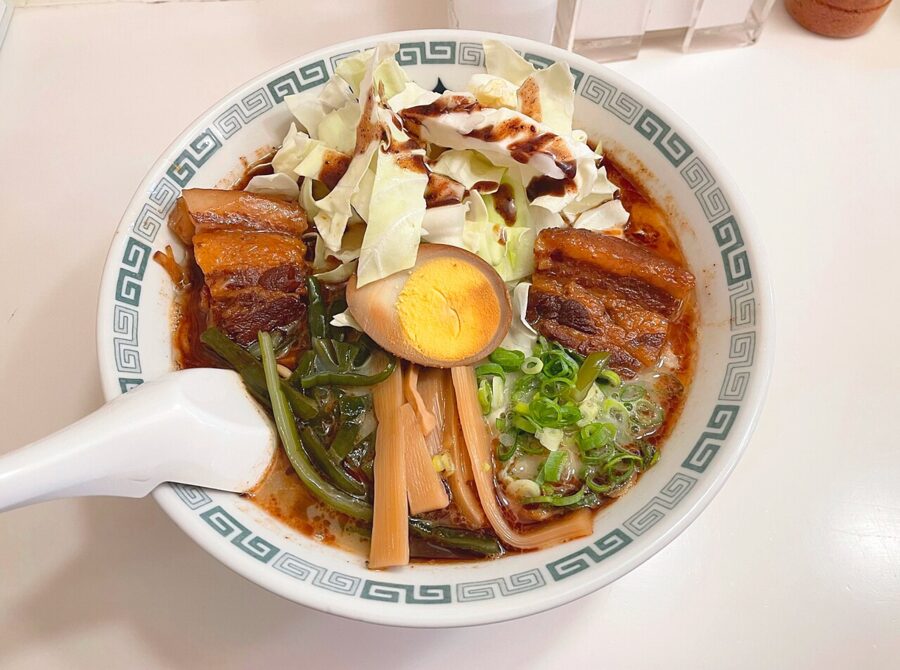
Many tonkotsu shops let you choose noodle firmness: 硬め (katame) firm, 普通 (futsū) regular, 柔らかめ (yawarakame) soft. In Hakata-style shops the noodles are thin, and when you finish them you call out 替え玉 (kaedama) for a second serving of noodles dropped into the soup you still have. Slurp. It cools the noodles, and nobody will look at you.
Udon (うどん)
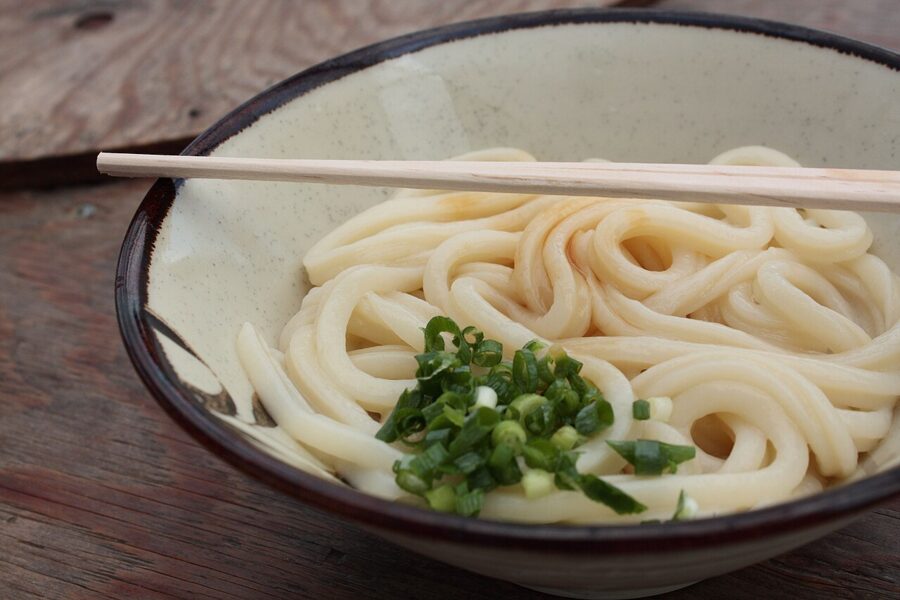
Udon are thick, soft wheat noodles. かけうどん (kake udon) is plain in hot broth, きつね (kitsune) adds sweet fried tofu, and 釜玉 (kamatama) tosses hot noodles with raw egg. 讃岐うどん (Sanuki udon), from Kagawa on Shikoku, is the firm, chewy style that the big chains copy.
The chain Marugame Seimen runs its shops cafeteria-style: you take a tray, order your noodles, pick tempura from the rack and pay at the end. A regular kake udon there is one of the cheapest hot meals on any Japanese high street.

Soba (そば)
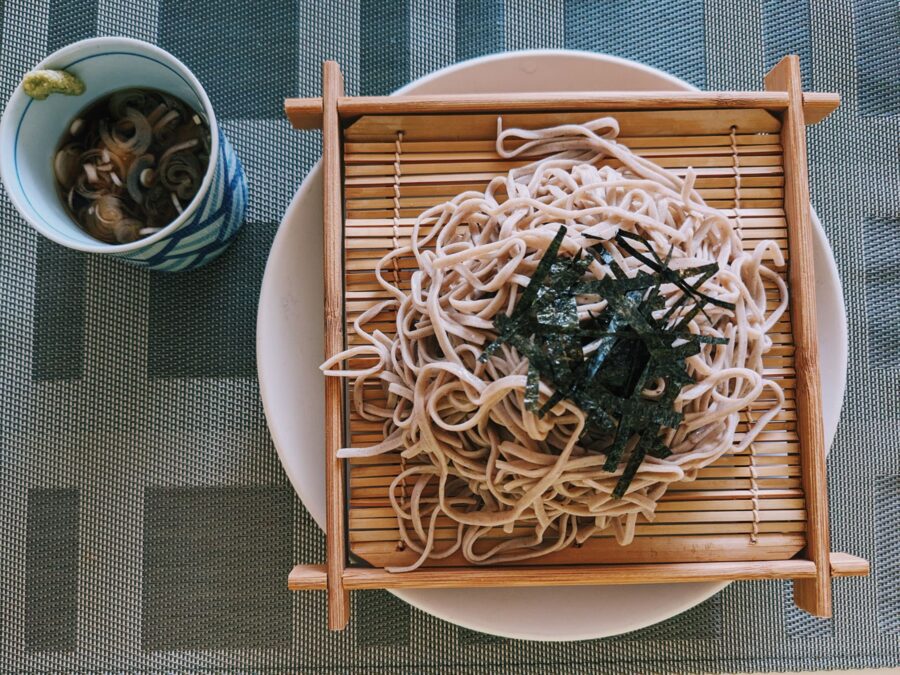
Soba are buckwheat noodles, thinner and grayer than udon, eaten hot in broth or cold. ざるそば (zaru soba) and もりそば (mori soba) are both cold noodles on a bamboo tray with a dipping sauce. When you finish, the shop may bring a pot of そば湯 (sobayu), the cooking water, to pour into the leftover sauce and drink. On New Year’s Eve, families eat 年越しそば (toshikoshi soba), “year-crossing soba”.
Donburi: a meal in one bowl
丼 (donburi), shortened to 丼 (don) at the end of a word, is a deep bowl of rice with something on top. 牛丼 (gyūdon) is simmered beef and onion. 親子丼 (oyakodon), “parent and child bowl”, is chicken with egg; カツ丼 (katsudon) is a pork cutlet set in egg. 天丼 (tendon) is tempura, 海鮮丼 (kaisendon) is raw seafood, and うな丼 (unadon) is grilled eel.
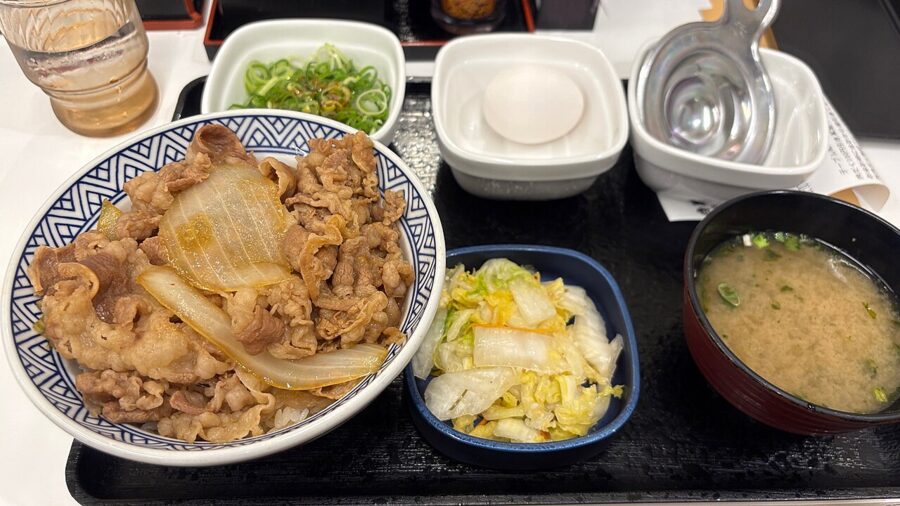

Gyudon chains are a grammar lesson in sizes. Yoshinoya’s menu, as of November 2026, runs 小盛 (komori) small, 並盛 (namimori) regular, 大盛 (ōmori) large, 特盛 (tokumori) extra large and 超特盛 (chō-tokumori) bigger still. A regular gyudon is ¥498 (about $3) if you eat in and ¥489 (about $3) to take away. The gap is tax: eating in carries 10% consumption tax, takeaway food the reduced 8%.
That is why staff ask 店内でお召し上がりですか (tennai de omeshiagari desu ka), “will you be eating in?”, at the till. It is formal keigo from the staff side; you only need to answer 店内で (tennai de) “in the shop” or 持ち帰りで (mochikaeri de) “to take away”. Menu prices in Japan must show the tax-inclusive total, so the number on the board is what you pay.
Fried, grilled and griddled
Tempura (天ぷら)
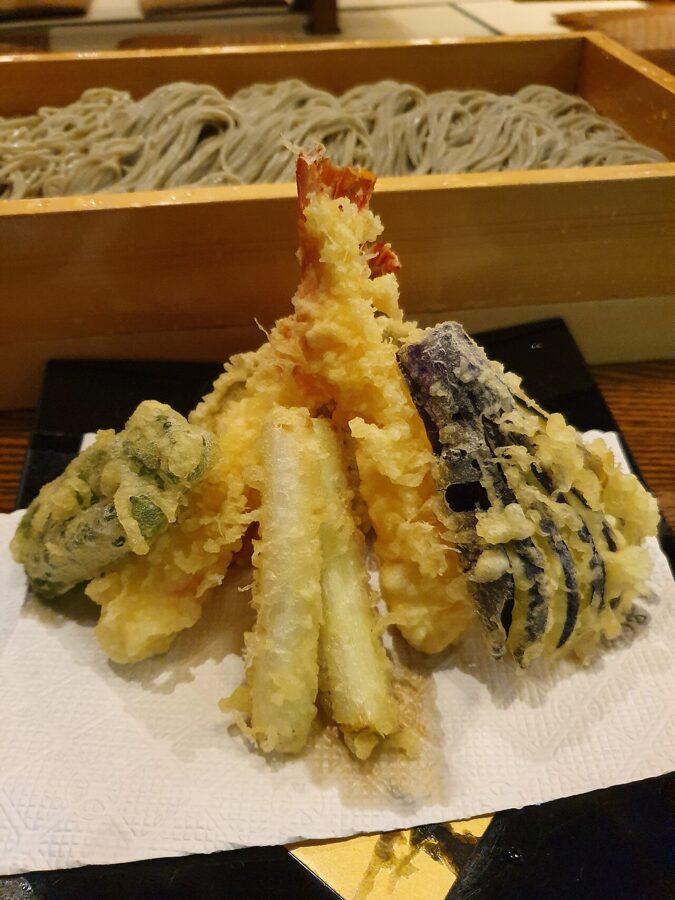
Tempura is seafood and vegetables in a thin, crisp batter, eaten with 天つゆ (tentsuyu), a dashi-based dipping sauce with grated daikon, or with salt. The classics are 海老 (ebi) prawn, なす (nasu) eggplant, かぼちゃ (kabocha) squash and whatever small fish is in season. A specialist counter fries piece by piece as you eat; a soba shop will sell you a tempura plate for a fraction of that.
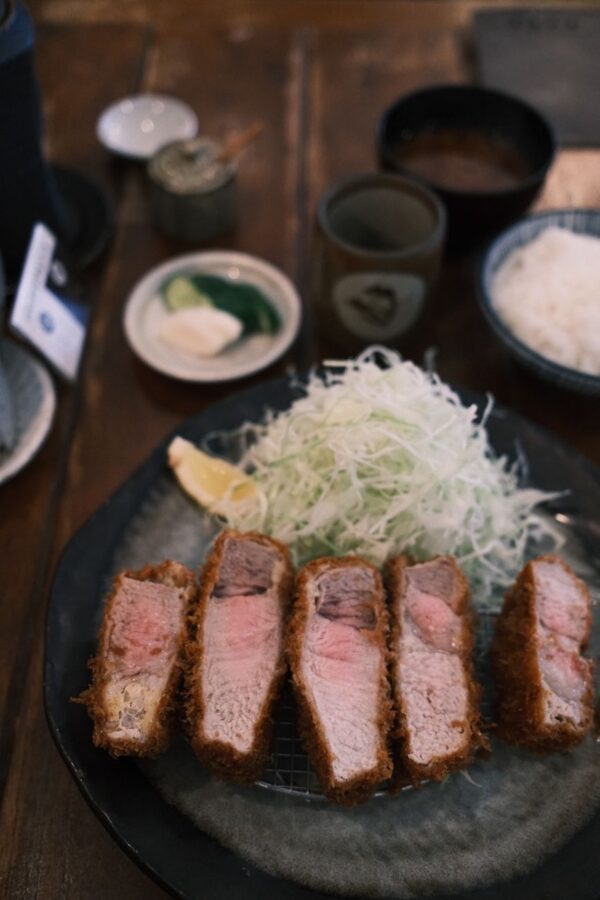
Two more fried dishes fill set-meal menus. とんかつ (tonkatsu) is a breaded pork cutlet with shredded cabbage; order ロース (rōsu) for loin with a fat edge or ヒレ (hire) for lean fillet. 唐揚げ (karaage) is marinated fried chicken, the lunchbox staple of the whole country.
Yakitori (焼き鳥)
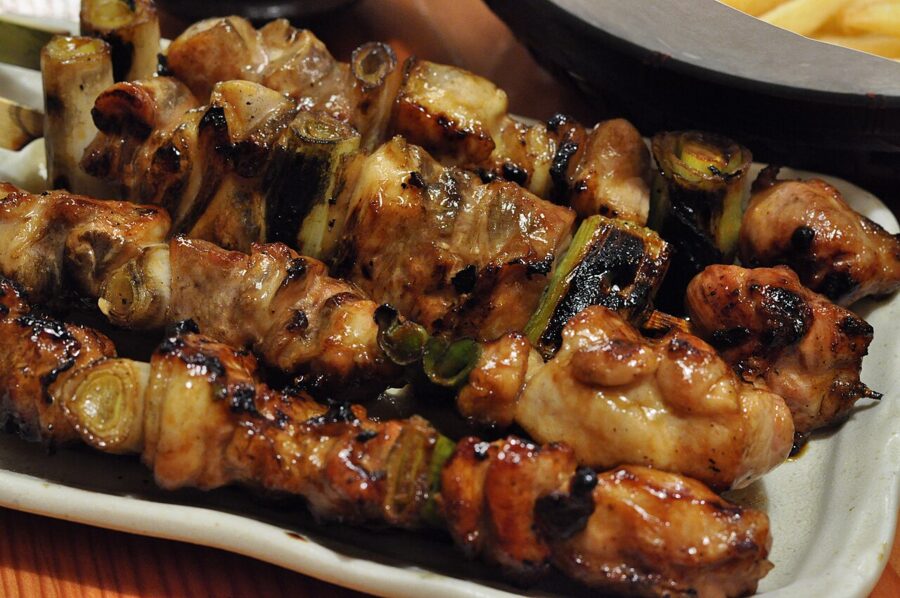
Yakitori is chicken grilled on skewers over charcoal. ねぎま (negima) alternates thigh and leek, つくね (tsukune) is a minced-chicken meatball, もも (momo) is thigh and 皮 (kawa) is skin. Staff will often ask たれ or 塩 (tare or shio): sweet soy glaze or salt. Say たれで (tare de) or 塩で (shio de).
Gyoza (餃子)
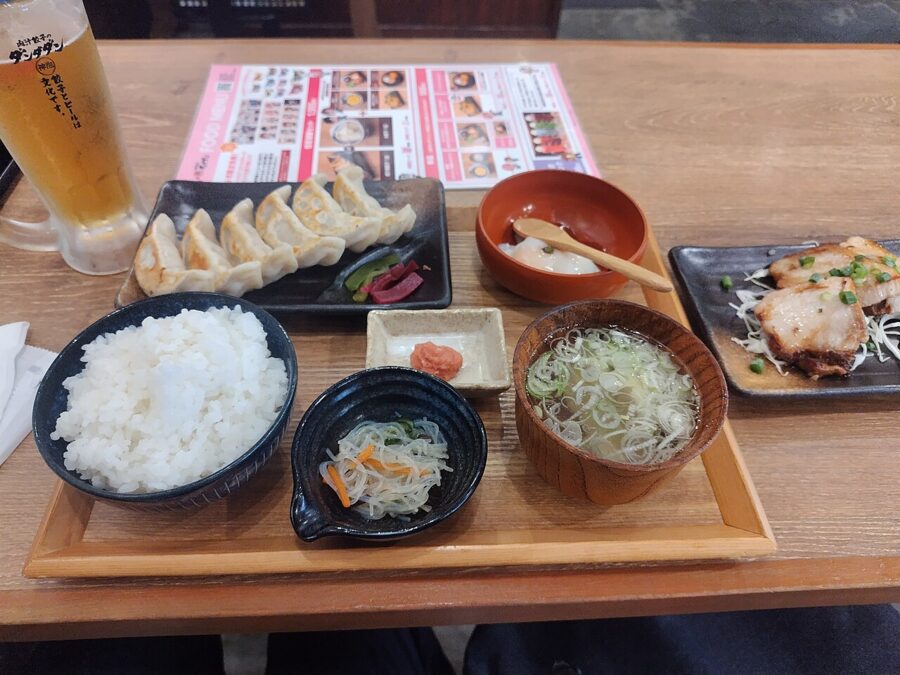
Gyoza are dumplings, usually pork and cabbage, pan-fried so the bottom crisps. 焼き餃子 (yaki-gyōza) are pan-fried, 水餃子 (sui-gyōza) boiled. You mix your own dip at the table from soy sauce, vinegar and chili oil, ラー油 (rāyu).
Two cities compete every year over gyoza. In the national household spending survey for 2025, Hamamatsu came first for the third year running and Utsunomiya second, according to Hamamatsu City’s own announcement in February 2026. Both sell the rivalry hard, and both are worth a stop.
Pots at the table: nabe, sukiyaki and oden
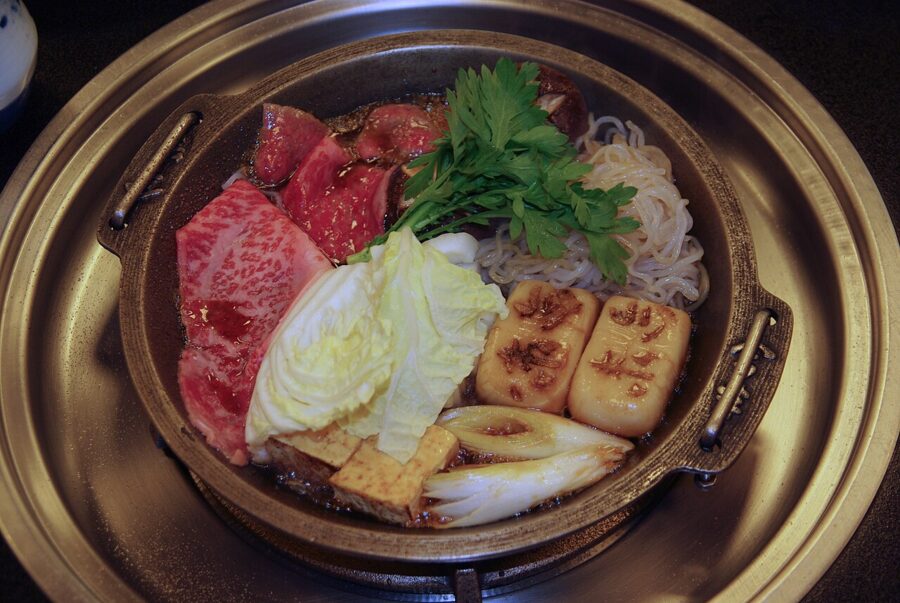
鍋 (nabe) means pot, and in winter it means a meal cooked in one pot in the middle of the table. すき焼き (sukiyaki) is thin beef, tofu, leeks and mushrooms cooked in a sweet soy mixture, then dipped in beaten raw egg. しゃぶしゃぶ (shabu-shabu) swishes thin meat through a light broth, named for the sound it makes. ちゃんこ鍋 (chanko nabe) is the sumo wrestlers’ stew.

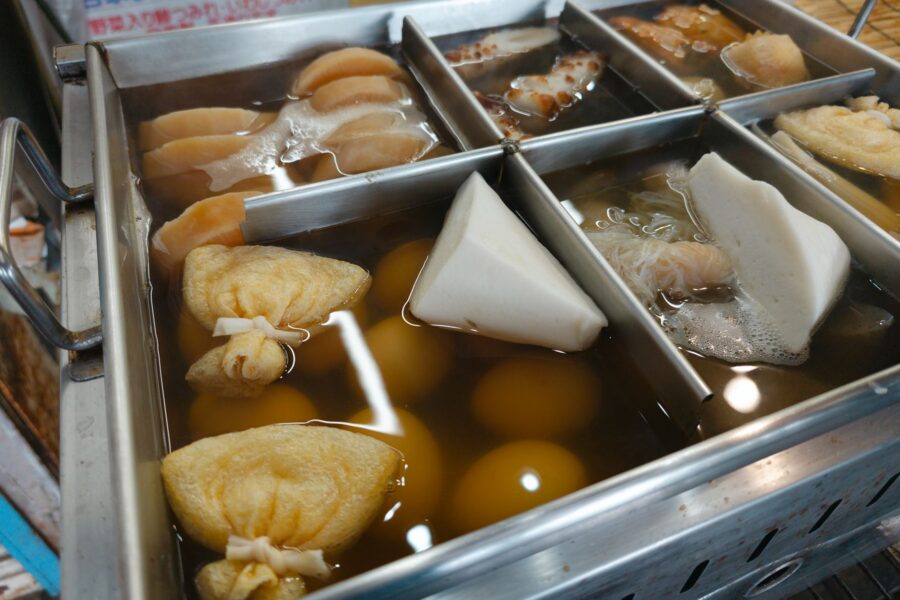
おでん (oden) is the slow one: daikon, boiled eggs, fish cakes and konnyaku simmering for hours in dashi. You will find it at izakaya and, from autumn, in a steaming tray by the konbini till. Point at what you want and the clerk ladles it into a cup.
Curry rice and the yōshoku menu
カレーライス (karē raisu) came to Japan from Britain in the late 1800s and stayed. It is a thick, mild-to-medium brown curry poured over rice. Spice levels go 甘口 (amakuchi) mild, 中辛 (chūkara) medium and 辛口 (karakuchi) hot; a カツカレー (katsu karē) puts a pork cutlet on top.
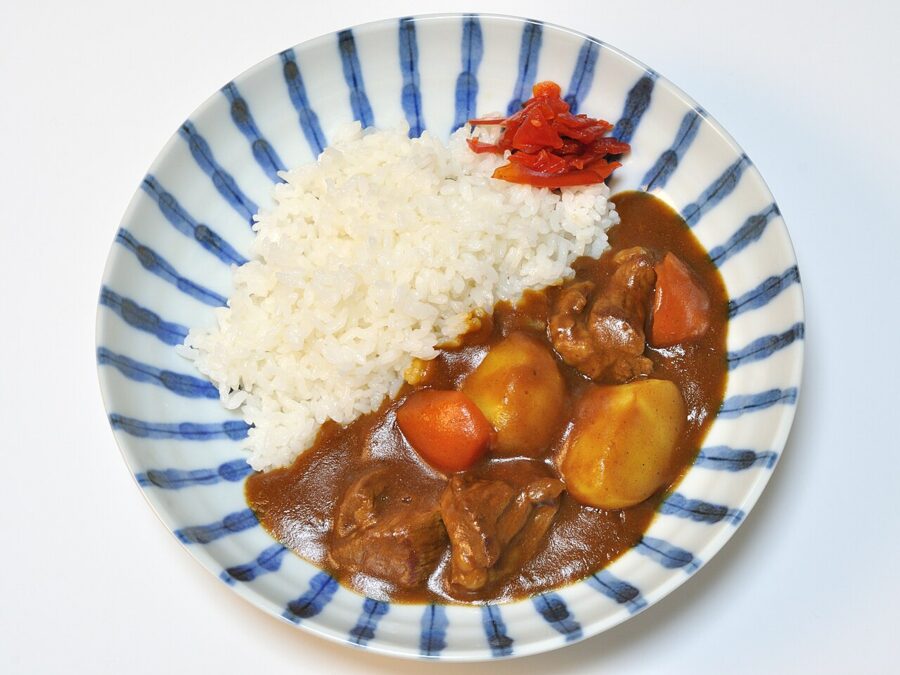
Curry is one of a family called 洋食 (yōshoku), Western dishes that Japan made its own. Look for オムライス (omuraisu), ketchup rice wrapped in omelet, ハンバーグ (hanbāgu), a hamburg steak without the bun, and コロッケ (korokke), croquettes. All are katakana, so this is where your katakana practice pays off fastest.
Something sweet
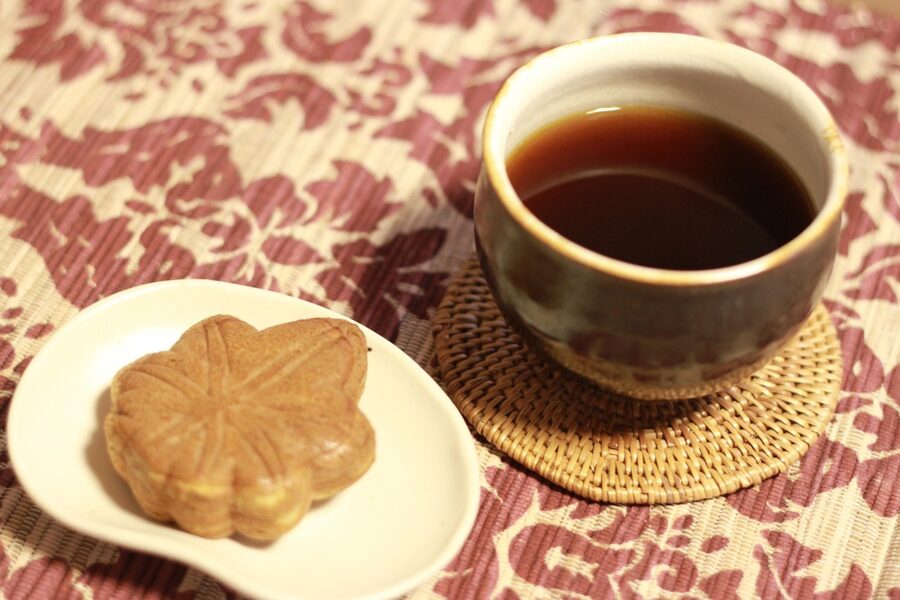
和菓子 (wagashi) are Japanese sweets, and most rest on 餡 (an), sweet red bean paste. It comes smooth, こしあん (koshian), or chunky, つぶあん (tsubuan), and people have firm views on which is better. 饅頭 (manjū) is a steamed bun around bean paste, 大福 (daifuku) a soft rice cake around it, and どら焼き (dorayaki) two pancakes with paste in between.
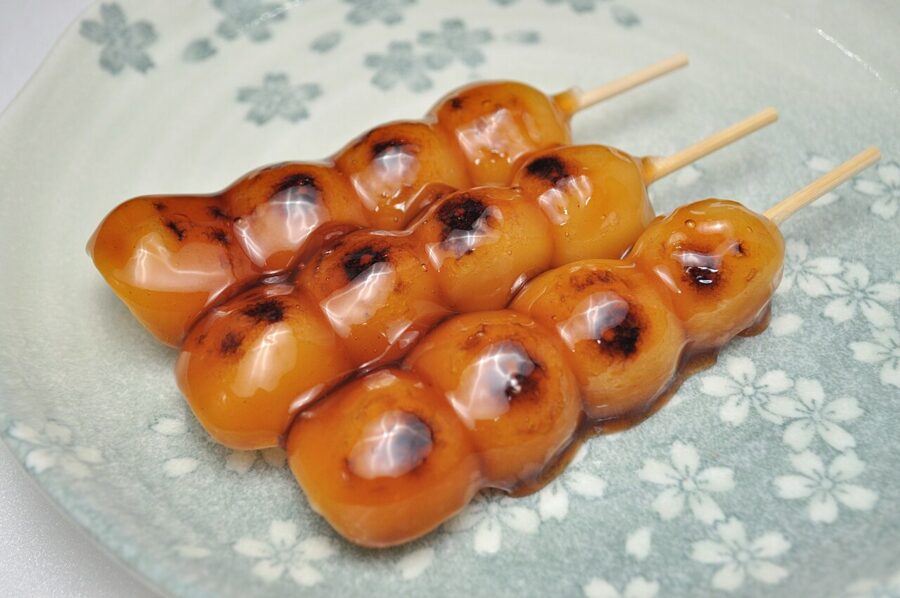
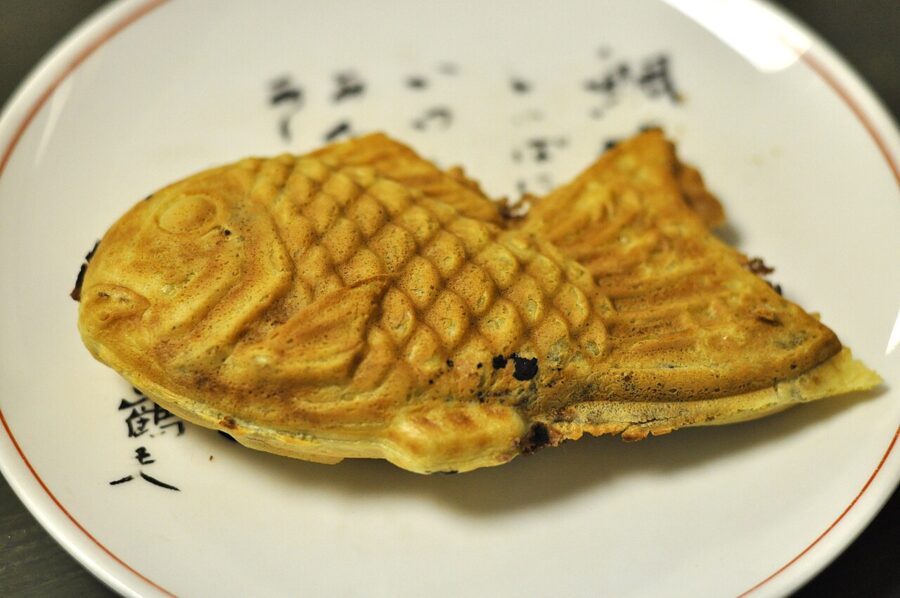
Seasons run the sweet shop: 桜餅 (sakura mochi) in a salted cherry leaf in spring, かき氷 (kakigōri) shaved ice in summer, chestnut, 栗 (kuri), in autumn.
Sake, beer and tea
Here is a word trap. 酒 (sake) in Japanese means alcohol in general. The rice wine English calls sake is 日本酒 (nihonshu), “Japanese alcohol”, and since 2015 that name has been protected as a geographical indication for sake brewed in Japan from Japanese rice. Ask for 日本酒 and you get the right thing every time.
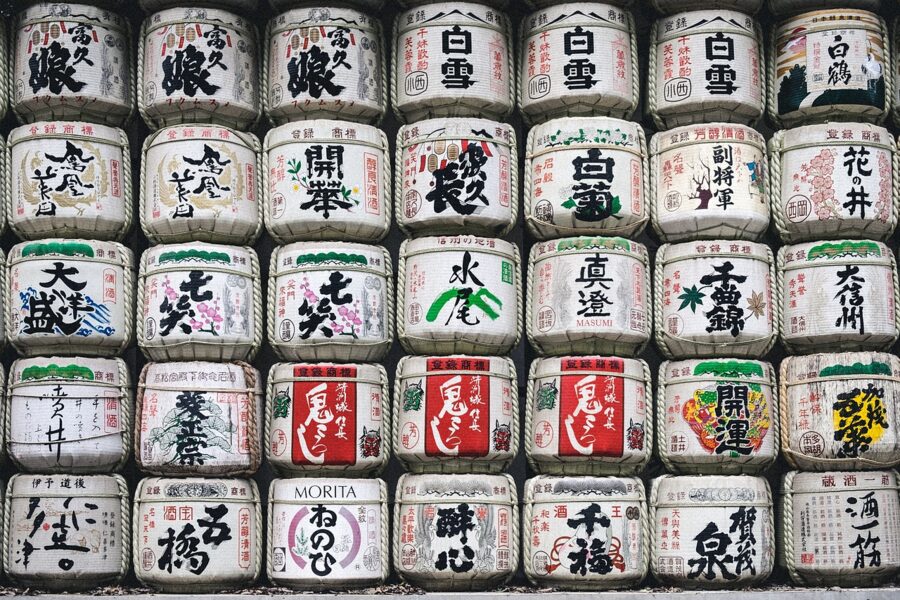
Order sake by temperature: 冷や (hiya) is cool or room temperature, 熱燗 (atsukan) is hot. 辛口 (karakuchi) means dry here, the same word as hot curry, and 甘口 (amakuchi) means sweet. Shōchū, 焼酎, is a distilled spirit often drunk with water or soda, and a 酎ハイ (chūhai) is shōchū with soda and fruit.

Beer is ビール (bīru), and the usual first izakaya order is とりあえず生 (toriaezu nama), “a draft for now”.
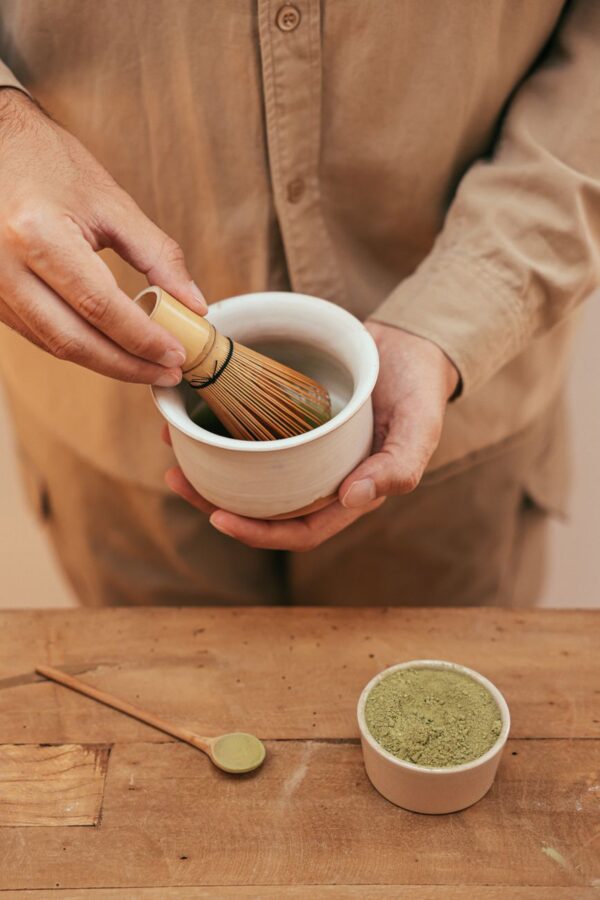
お茶 (ocha) is green tea in general, and many restaurants pour it free. 煎茶 (sencha) is the everyday leaf tea, ほうじ茶 (hōjicha) is roasted and brown, 玄米茶 (genmaicha) has toasted rice in it, and 麦茶 (mugicha), cold barley tea, is what Japan drinks all summer. 抹茶 (matcha) is powdered tea whisked in a bowl, the tea of the tea ceremony.
Where to eat it
Konbini (コンビニ)
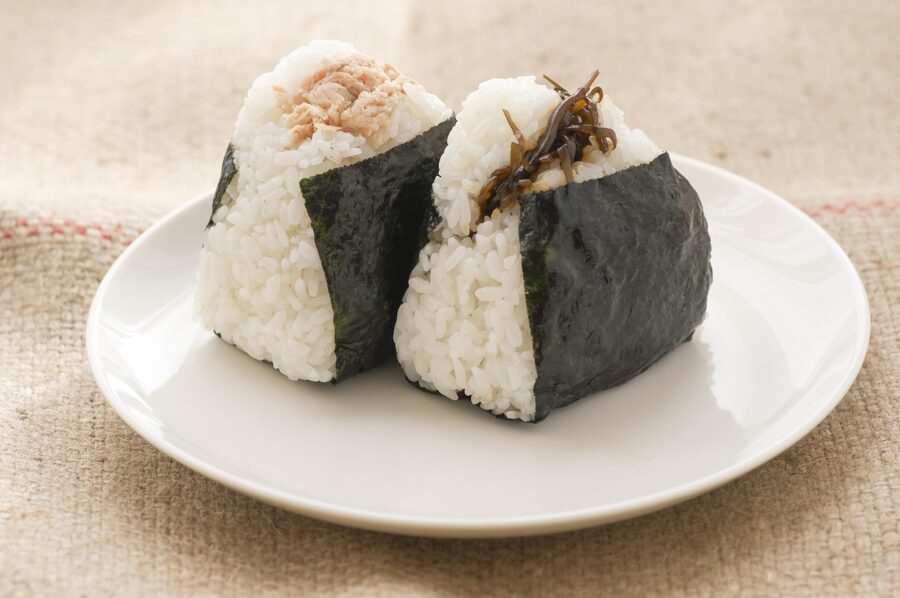
コンビニ (konbini), the convenience store, is where you will eat your first Japanese meal, probably within an hour of landing. Onigiri, bento, oden and hot coffee are there around the clock, and plastic bags have cost extra since July 2020, so say 袋いりません (fukuro irimasen), “I don’t need a bag”, if you have your own.
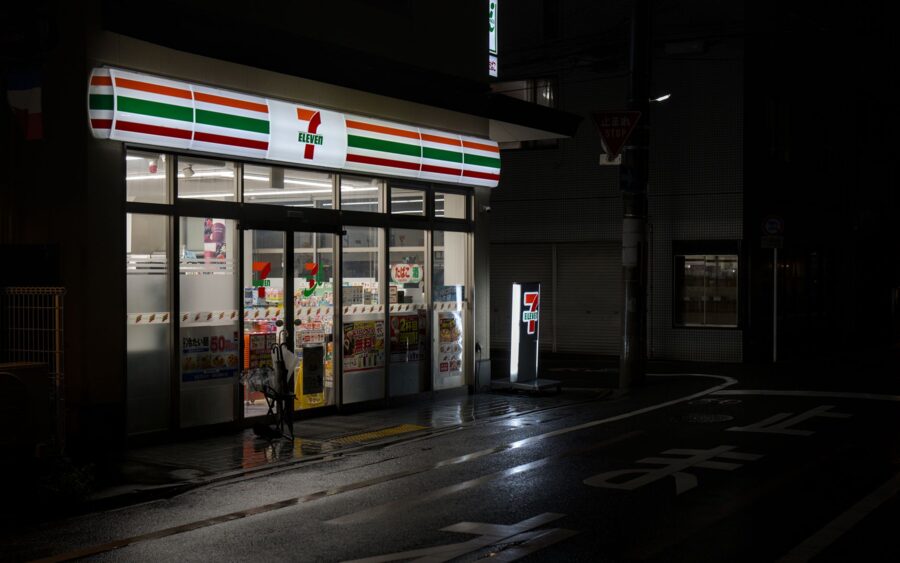
At the till the clerk will ask two quick things. 温めますか (atatamemasu ka), “shall I heat it?”, is about your bento; answer はい、お願いします (hai, onegai shimasu) or 大丈夫です (daijōbu desu), “it’s fine”. お箸おつけしますか (ohashi otsuke shimasu ka) asks if you want chopsticks, and it is keigo, so listen for お箸 (ohashi) and nod.
Shokudō and teishoku shops
食堂 (shokudō) is a plain diner, and 定食屋 (teishokuya) a shop that sells set meals. A 定食 (teishoku) is the washoku pattern on a tray: main dish, rice, soup and pickles. Look for 日替わり (higawari), the daily special, usually the best value on the board. Rice refills, おかわり (okawari), are often free; ask before you assume.
Izakaya (居酒屋)
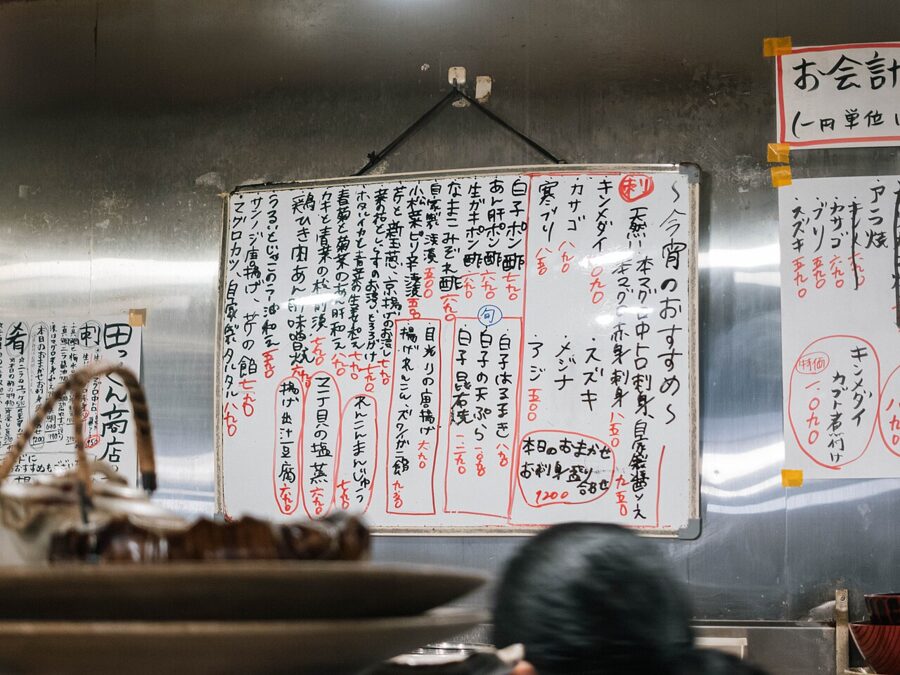
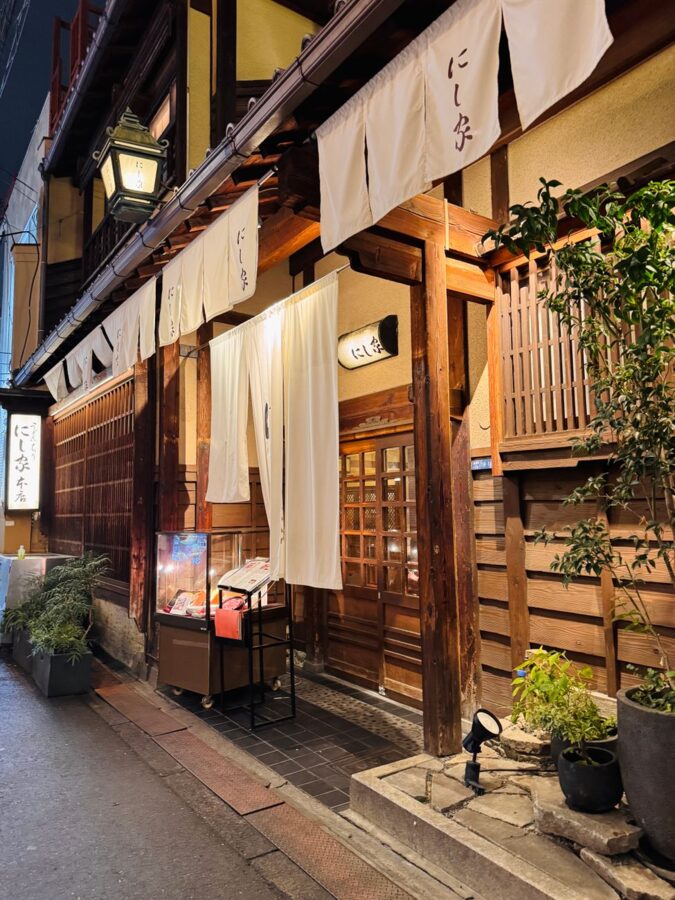
居酒屋 (izakaya), literally “stay-drink-shop”, is a pub where the food matters as much as the drink. Everyone orders small plates to share, a few at a time, and keeps ordering. A small dish arrives that you did not order, お通し (otōshi), and it carries a per-person charge on the bill; it is a cover charge, not a mistake. And 飲み放題 (nomihōdai), all-you-can-drink, is sold by the time slot.
Ramen counters and ticket machines
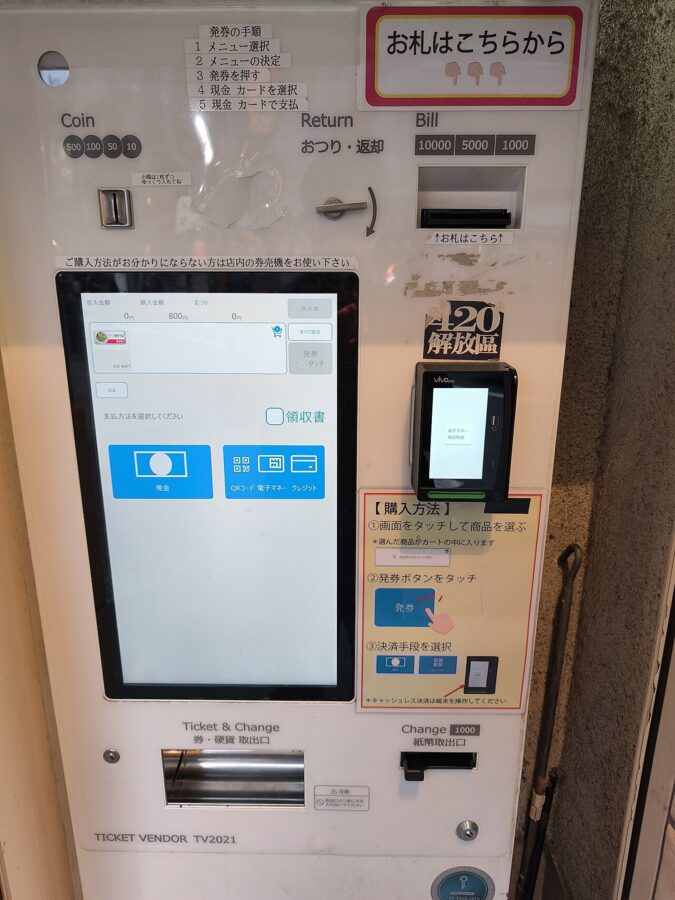
Many ramen and gyudon shops make you order at a 券売機 (kenbaiki), a ticket machine by the door. Put money in, press the button with your dish, take the paper ticket and hand it to the cook. Toppings are separate buttons, and 売切 (urikire) lit on a button means sold out.

Depachika and ekiben
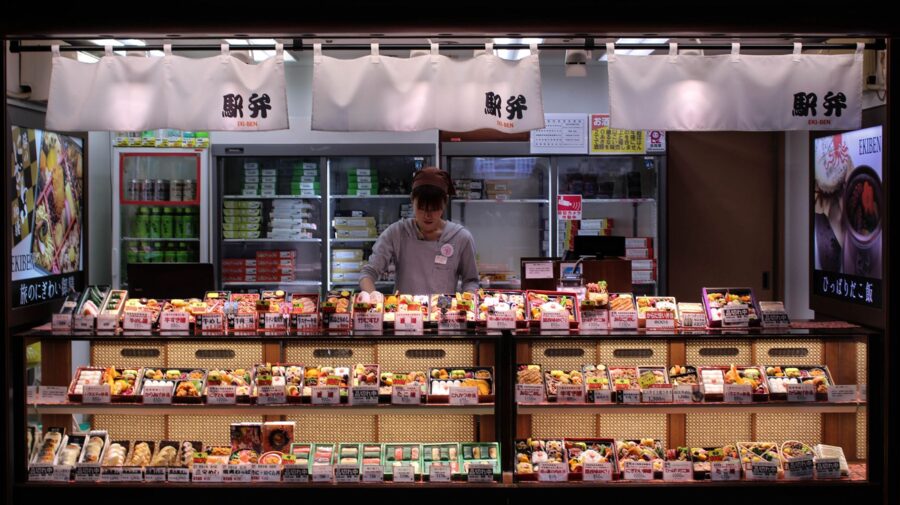
デパ地下 (depachika) is short for the department-store basement, デパート (depāto) plus 地下 (chika), “underground”. It is a food hall of bento, pickles, fried food, sweets and gift boxes; the basement food floor of Isetan in Shinjuku is a good first one. Toward closing, look for stickers saying 割引 (waribiki) “discount” or 半額 (hangaku) “half price”.
Kaiseki, teppanyaki and the special-occasion end
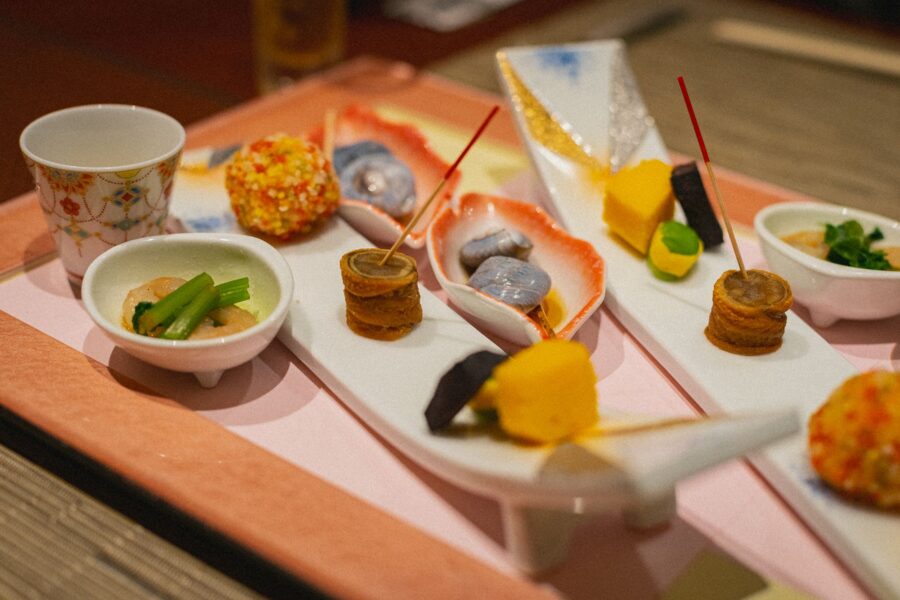
Two different words are both read かいせき (kaiseki). 懐石 is the meal served before a formal tea ceremony, and 会席 is the multi-course banquet you will meet at a ryokan dinner: small seasonal dishes, one after another. When you see 会席料理 at an inn, expect a long dinner and plan to be hungry. 鉄板焼き (teppanyaki) is the other occasion meal, where the cook grills steak and seafood on an iron plate in front of you.
Menu words worth knowing
These turn up on boards, tablets and ticket machines everywhere. Learn them as a set and most menus stop being walls of text.
| Word | Romaji | Meaning |
|---|---|---|
| 定食 | teishoku | set meal: main, rice, soup, pickles |
| 単品 | tanpin | à la carte, the dish alone |
| 並 / 大盛 / 特盛 | nami / ōmori / tokumori | regular / large / extra large |
| おかわり | okawari | a refill, a second helping |
| 日替わり | higawari | daily special |
| 本日のおすすめ | honjitsu no osusume | today’s recommendation |
| 季節限定 | kisetsu gentei | seasonal, limited time |
| 税込 | zeikomi | tax included |
| 店内 / 持ち帰り | tennai / mochikaeri | eat in / take away |
| 食べ放題 / 飲み放題 | tabehōdai / nomihōdai | all you can eat / all you can drink |
| お通し | otōshi | izakaya starter with a cover charge |
| 売切 | urikire | sold out |
| 辛口 / 甘口 | karakuchi / amakuchi | hot or dry / mild or sweet |
| ラストオーダー | rasuto ōdā | last orders |
Two more help if you have dietary rules. 肉 (niku) is meat, 豚 (buta) pork, 牛 (gyū) beef, 鶏 (tori) chicken, 魚 (sakana) fish and 卵 (tamago) egg. Dashi is usually made from fish, so a vegetable dish may not be vegetarian; say so clearly rather than hoping.
Ordering, step by step
Japanese has politeness levels, and restaurants show them off. Staff speak to you in formal keigo; you answer in ordinary polite desu/masu Japanese, and that is exactly right. Casual forms are for friends at the table, not for the person taking your order. The Japanese grammar behind the levels can wait; the phrases below work as they are.
| Japanese | Romaji | English | Level |
|---|---|---|---|
| いらっしゃいませ。何名様ですか。 | irasshaimase. nanmei-sama desu ka. | Welcome. How many of you? (staff) | formal (keigo) |
| 二人です。 | futari desu. | Two people. | polite |
| すみません。 | sumimasen. | Excuse me (to call staff). | polite |
| 英語のメニューはありますか。 | eigo no menyū wa arimasu ka. | Do you have an English menu? | polite |
| おすすめは何ですか。 | osusume wa nan desu ka. | What do you recommend? | polite |
| これをください。 | kore o kudasai. | This one, please. | polite |
| 牛丼の並をひとつお願いします。 | gyūdon no nami o hitotsu onegai shimasu. | One regular beef bowl, please. | polite |
| 卵アレルギーがあります。 | tamago arerugī ga arimasu. | I have an egg allergy. | polite |
| お水をお願いします。 | omizu o onegai shimasu. | Water, please. | polite |
| 生、ひとつ。 | nama, hitotsu. | One draft beer. | casual |
| お会計お願いします。 | okaikei onegai shimasu. | The bill, please. | polite |
| カードで払えますか。 | kādo de haraemasu ka. | Can I pay by card? | polite |
| 別々でお願いします。 | betsubetsu de onegai shimasu. | Separate bills, please. | polite |
| ごちそうさまでした。 | gochisōsama deshita. | Thank you for the meal (leaving). | polite |
Count with the native numbers: ひとつ (hitotsu) one, ふたつ (futatsu) two, みっつ (mittsu) three. They work for almost any item, so you never need the right counter word in a hurry. For portions, 一人前 (ichininmae) means “one person’s serving”.
Nobody expects a tip, and leaving one causes confusion; the staff may chase you down the street with your change. In most casual places you pay at the register by the door, not at the table, so take the bill slip up with you.
Regional dishes to plan a trip around
Japanese has a word for a local dish worth the trip: 名物 (meibutsu). Every town claims a few, and you can plan a route by them. Here are the ones I would travel for.
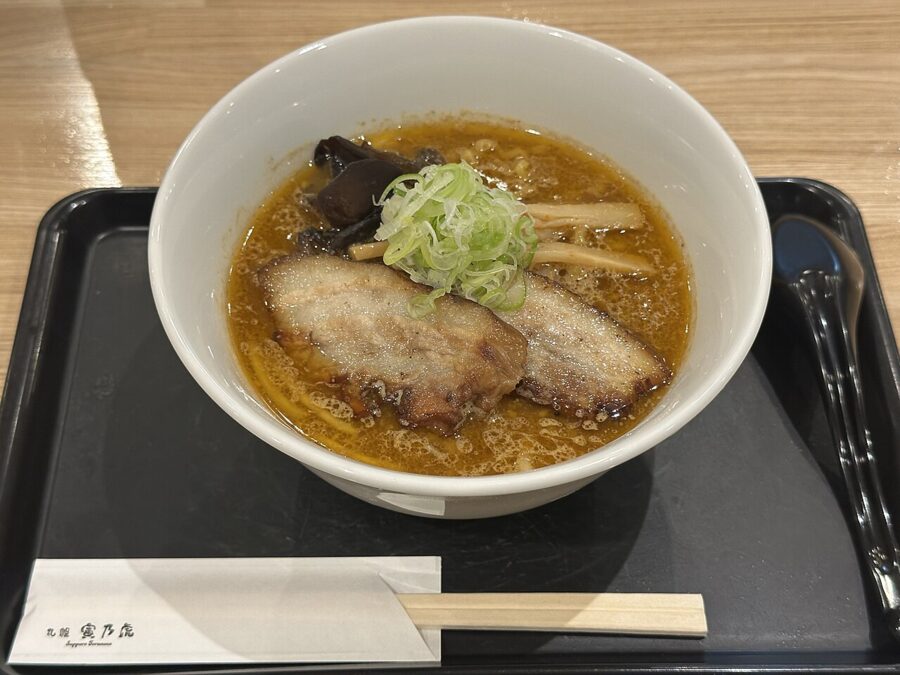
Hokkaido. Sapporo is the home of 味噌ラーメン (miso rāmen), a thick miso broth with bean sprouts and corn, built for a city with long snowy winters. Hakodate’s morning market sells seafood bowls piled with crab, salmon roe and sea urchin.

Sendai. 牛たん (gyūtan), grilled beef tongue, comes in thick, chewy slices with barley rice and oxtail soup. If you only change trains in Sendai, buy it as an ekiben on the platform.
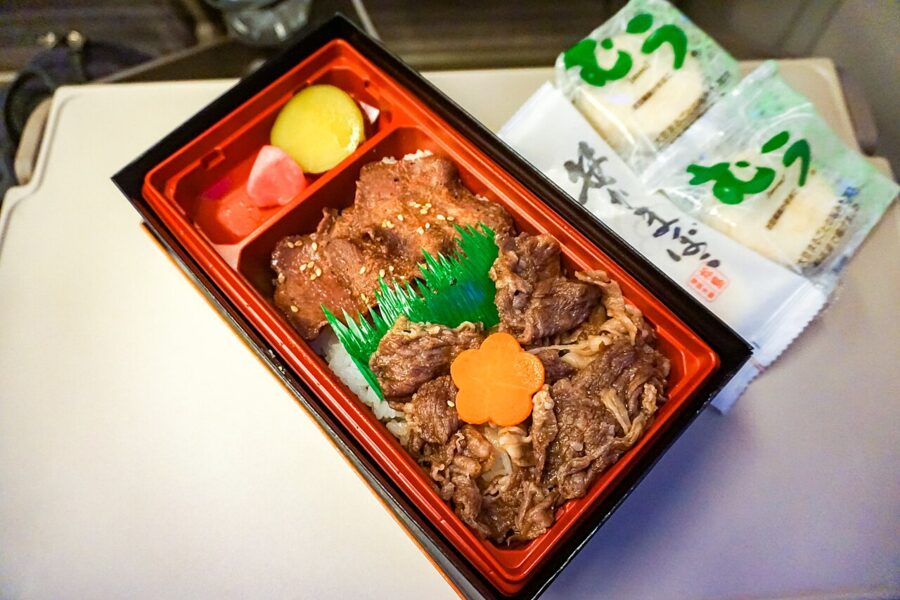

Tokyo and Niigata. Tokyo’s own griddle dish is もんじゃ焼き (monjayaki), a runny batter you lift off the hotplate with tiny spatulas, and the Tsukishima district is lined with shops serving it. Niigata, a short Shinkansen ride north, is rice and sake country, and the home of hegi soba.
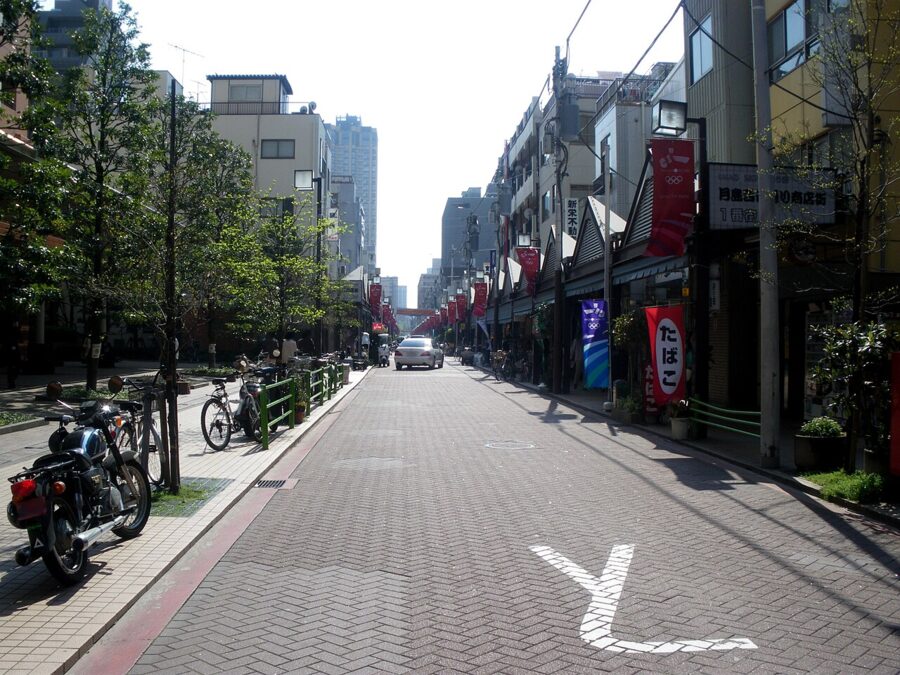

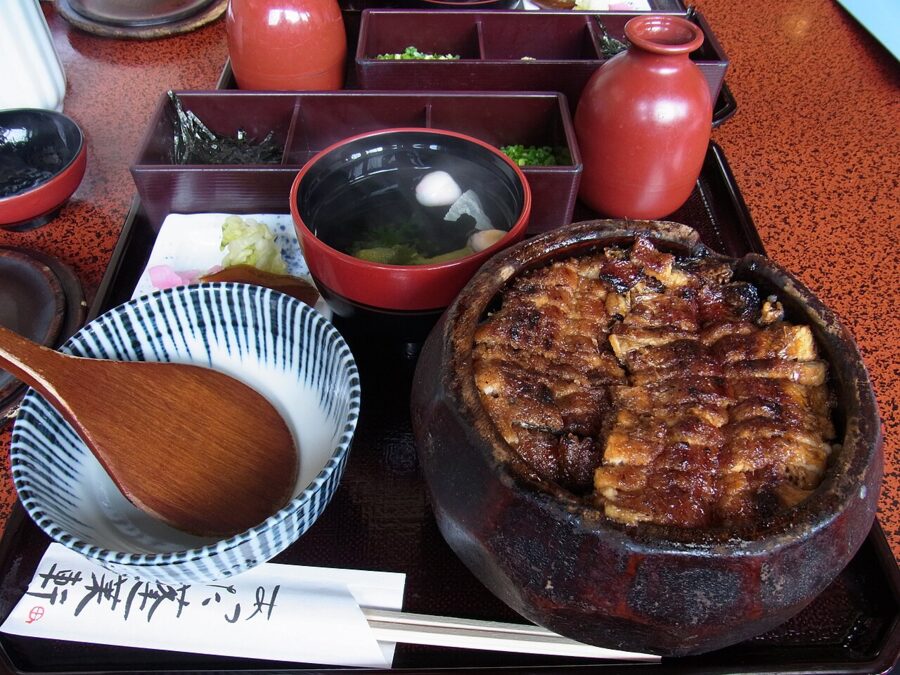
Nagoya. ひつまぶし (hitsumabushi) is grilled eel chopped over rice, eaten in three rounds: plain, then with condiments, then with broth poured over. Nagoya also does 味噌カツ (miso katsu), pork cutlet in a sweet red miso sauce, and flat きしめん (kishimen) noodles.

Kyoto. Kyoto cooking is quiet: 湯豆腐 (yudōfu), tofu simmered in kelp broth, near the temples, おばんざい (obanzai) home-style side dishes, and kaiseki at the formal end. Uji, just south, is matcha country.
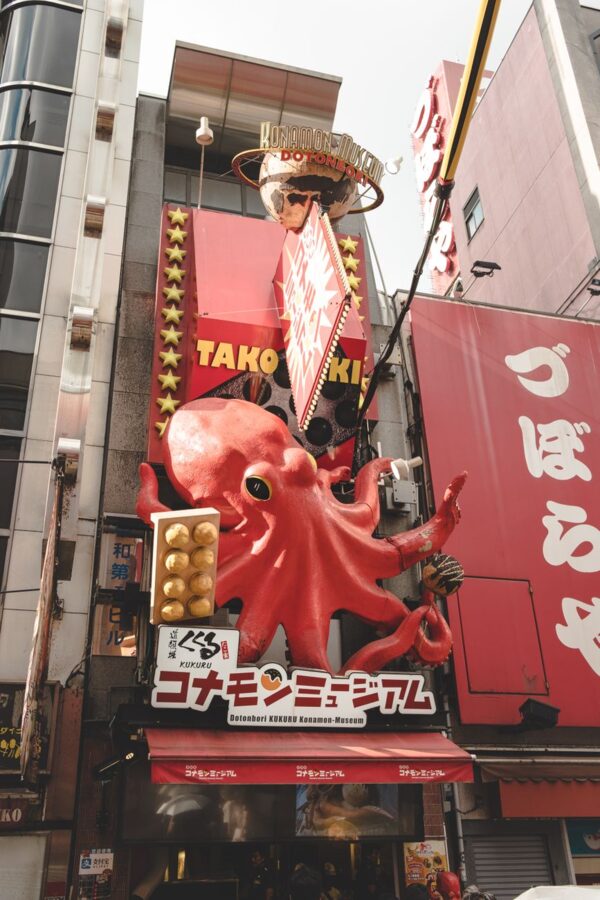
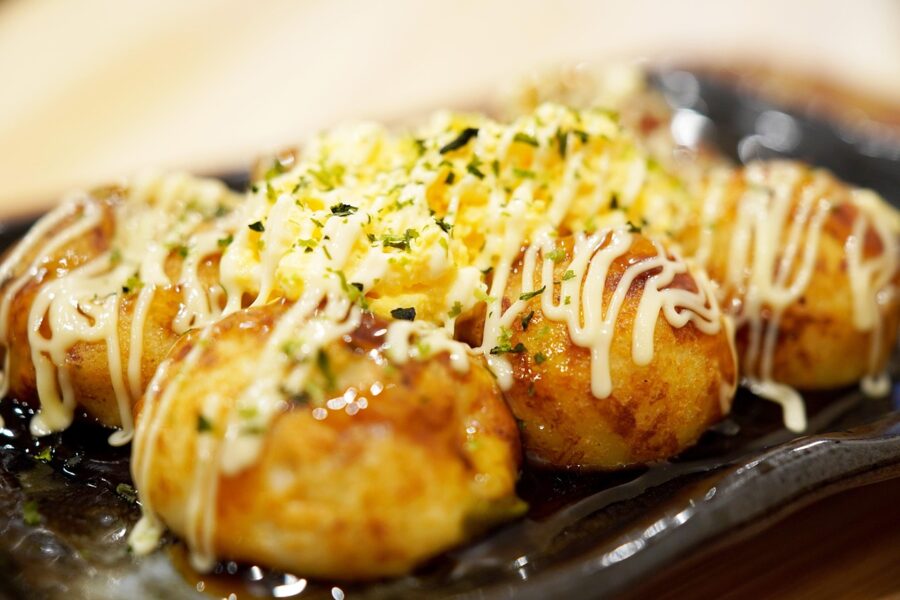
Osaka. Osaka is the city of 粉もん (konamon), flour-batter food. たこ焼き (takoyaki) are batter balls with octopus inside, turned with picks in a dimpled iron pan, and お好み焼き (okonomiyaki) is a savory pancake of cabbage and batter. 串カツ (kushikatsu) are fried skewers, and the shared sauce pot comes with a famous rule: 二度づけ禁止 (nidozuke kinshi), no double dipping.
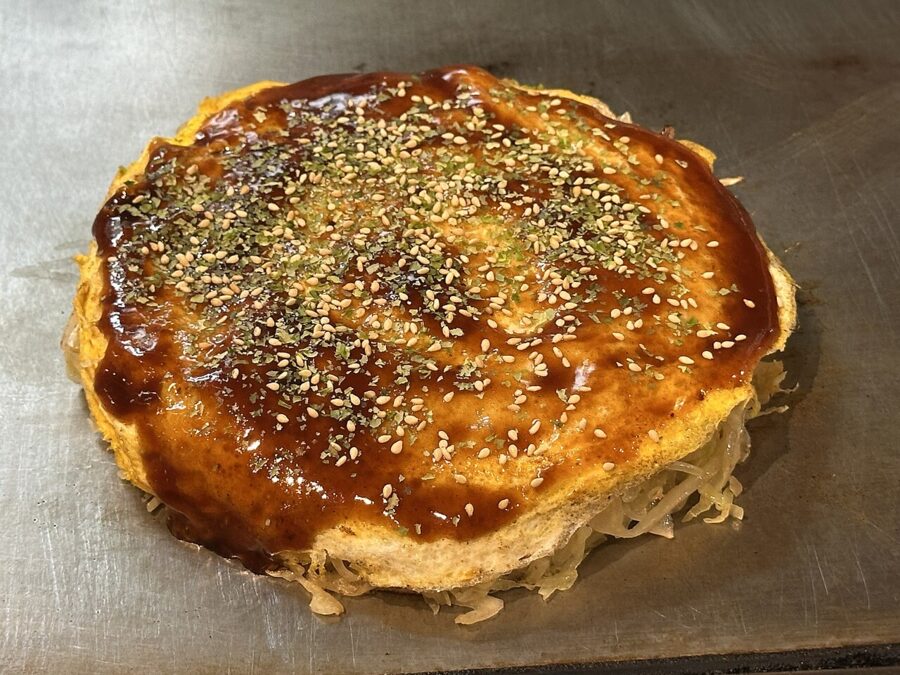
Hiroshima. Hiroshima builds its okonomiyaki in layers instead of mixing it: a thin crepe, a mountain of cabbage, pork, a layer of noodles and an egg on the bottom. Ask for そば入り (soba-iri) or うどん入り (udon-iri) to choose the noodle.

Kagawa. Kagawa, on Shikoku, is udon country, and Takamatsu’s self-service shops let you warm your own noodles, add toppings and pay by the bowl.
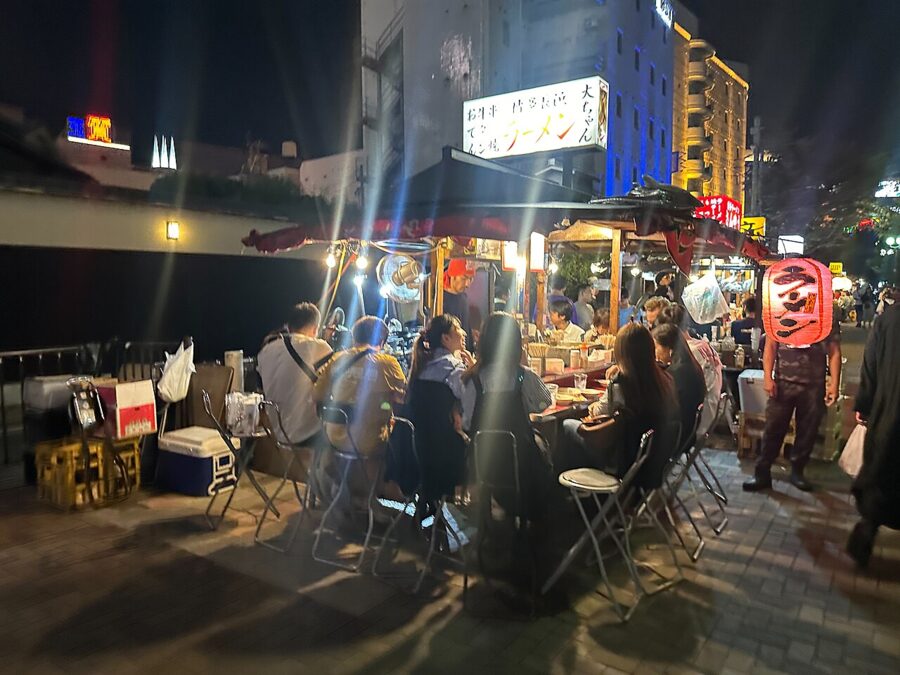
Fukuoka. Hakata is the home of thin-noodle tonkotsu ramen and of 屋台 (yatai), open-air food stalls that set up along the river at night. Order a ramen, a few skewers and a beer, and squeeze onto the bench. The city is also known for 明太子 (mentaiko), spicy cod roe.

Okinawa. 沖縄そば (Okinawa soba) is made from wheat, not buckwheat, and served in pork broth with braised pork belly. ゴーヤーチャンプルー (gōyā chanpurū) stir-fries bitter melon with tofu, egg and pork. Okinawan has its own words, and チャンプルー, “mixed”, is one of them.
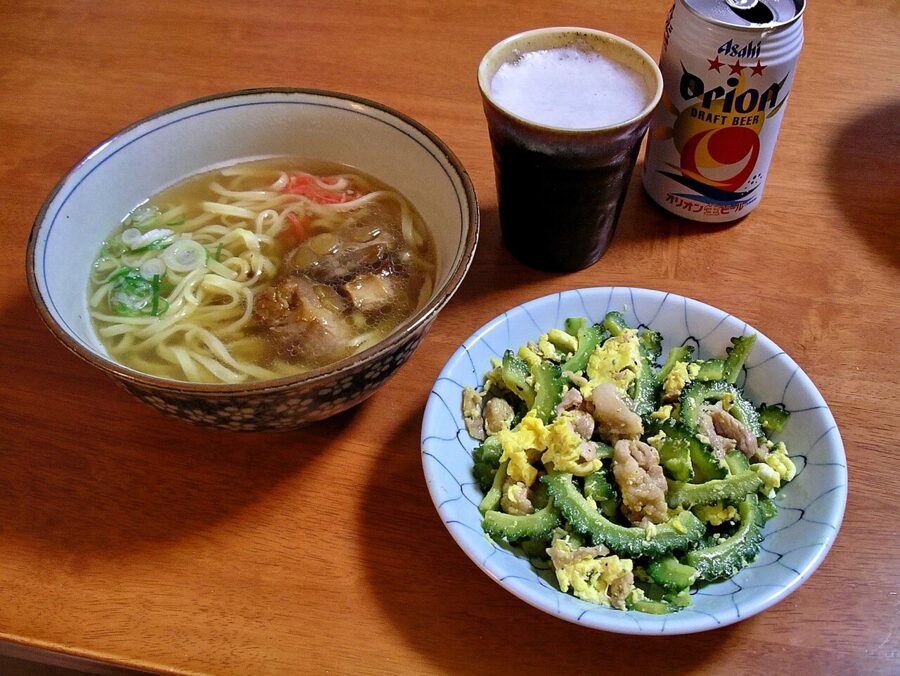

Table manners in brief
Food is the part of Japanese culture you practice three times a day, and only a few rules really matter. Most of them come from two places: funerals and sharing.
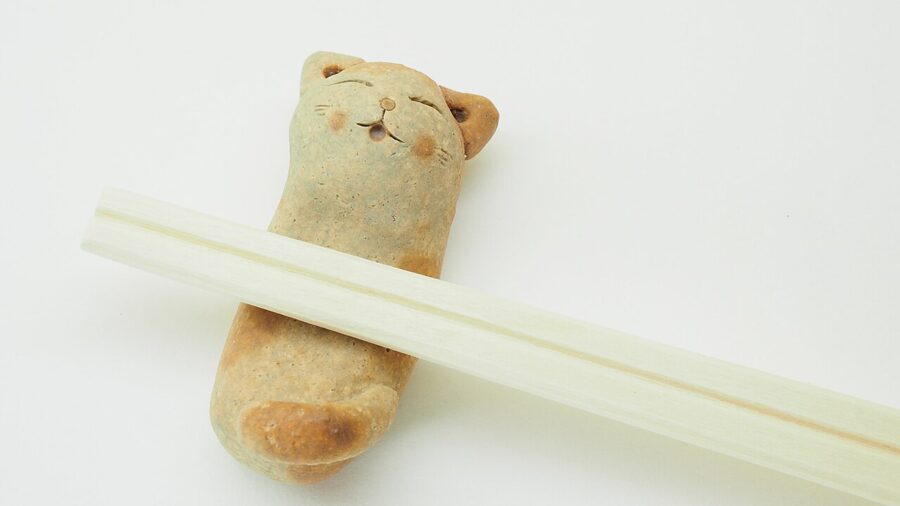

- Never stand chopsticks upright in a bowl of rice. It echoes the bowl placed for the dead. Rest them on the holder, 箸置き (hashioki), or across your plate.
- Never pass food from your chopsticks to someone else’s. That too echoes a funeral rite. Put it on their plate instead.
- Lift your rice bowl and soup bowl toward your mouth. Drinking miso soup straight from the bowl is correct.
- Slurp noodles freely.
- Use the wet towel, おしぼり (oshibori), for your hands.
- When drinking with others, pour for them and let them pour for you. Topping up your own glass looks a little lonely.
- Dip nigiri fish-side down in soy sauce, not rice-side, or the rice falls apart.
Eating while walking down the street is frowned upon in many places, though festival stalls and some market streets are exceptions. If you buy food at a stall, stand by it to eat. And say the two words.
Tonight, say いただきます (itadakimasu) before you eat, even alone, and ごちそうさまでした (gochisōsama deshita) when you put your chopsticks down. Then put ten dish names on flashcards, kana on the front, and order one of them at your next meal.